The YKDM-800 Edge Grinding Production Line prepares straight or profiled edges with adjustable grinding depth. Single- or double-side configurations ensure perfect parallelism, the foundation for quality tile edging and downstream polishing.
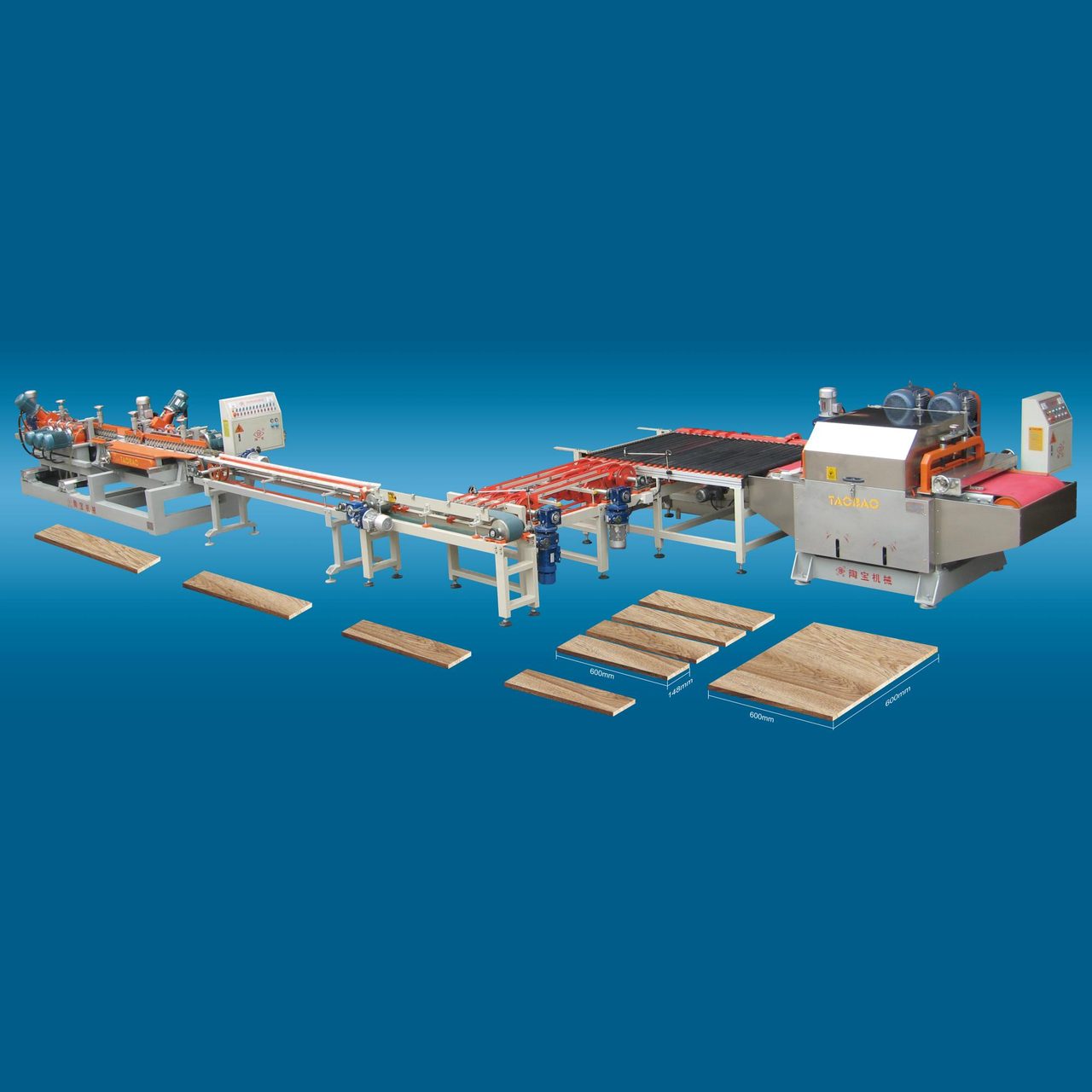
Engineered for clean edges with minimal chipping on ceramic, porcelain and stone.
Rigid frame and oil-lubricated spindles with external water cooling for long service life.
Reduces manual labor and improves yield for continuous production environments.
CE-aware build, English documentation and remote technical support for overseas buyers.
Daily Maintenance (Every 8 Hours):
Weekly Maintenance (Every 40 Hours):
Monthly Maintenance (Every 120 Hours):
Quarterly Maintenance:
Cost Impact: Unplanned downtime averages $1,500/hour; 42% of stoppages are equipment failure; manufacturers face ~800 hours of unplanned downtime annually. Prevention costs 15-20% of total maintenance budget but prevents 70-80% of potential failures.
Surface finish depends on grinding wheel grit, hardness, and grinding parameters. Our recommended wheels use selected alumina/silicon carbide abrasives with multi-stage grit progression (36#→80#→120#→220#→320#), achieving final finish Ra≤0.8μm. Touchscreen presets for each grinding stage make operation simple.The edge polisher (CP-1300) is designed for seamless integrated basins and thermoformed basins — polishing the bottom, side edges (bright flat finish), and upper/lower 45° small corners in one pass with excellent surface finish and straightness. The PG-1200 R3 polisher simultaneously processes flat edges and R3 small corner radii — completing multiple operations in one pass.
Chipping is usually caused by excessive grinding depth or too-coarse wheels. Our machines offer infinitely adjustable feed speed (servo control) with grinding depth adjustable to 0.01mm precision — effectively preventing chipping. Light cuts with multiple passes in rough grinding stage reduce chipping risk. Our recommended diamond edge wheels are specifically designed to address chipping.
Randomly inspect 2-3 tiles per shift with an R-gauge for arc radius and a roughness tester for surface finish — record data. When dimensions or finish exceed tolerance, adjust grinding parameters or replace wheels. Regular quality inspection is key to maintaining product consistency and a sensitive indicator of machine condition changes.
Send us your material type, size and target output — we reply within 24h.
Get a Quote